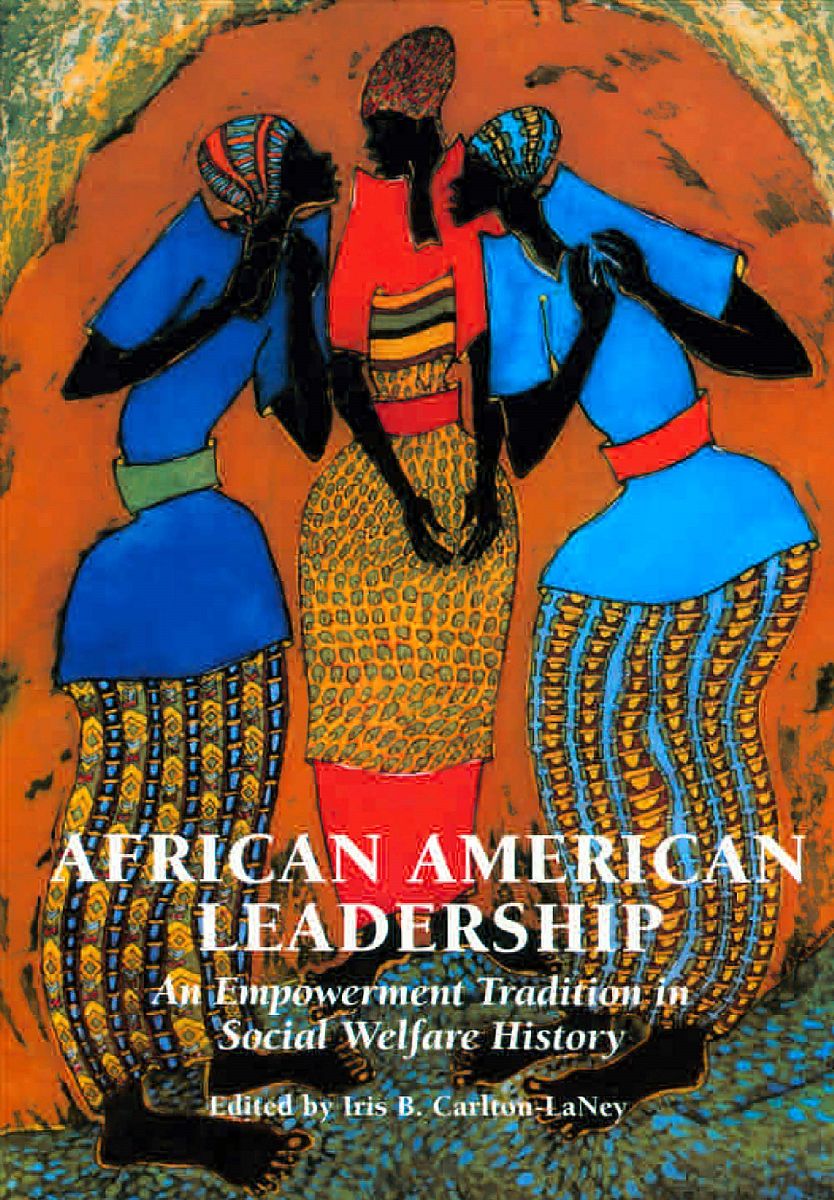
African American Leadership
Editor: Iris B. Carlton-LaNey
Page Count: 260
ISBN: 978-0-87101-317-0
Published: 2001
Item Number: 3177
$31.77
NASW members receive 10% discount on books and eBooks by entering their membership number at checkout.
For far too long, the huge contribution of African Americans to the social work profession has been relegated to little more than a footnote. The truth is, these forward-thinking individuals enhanced the quality of life within and outside their communities for generations. Their stories have never been told. Until now.
Sixteen painstakingly researched chapters, written by social workers, highlight the distinct roles of African American social work pioneers from the 1890s through the 1940s. The book discusses the birth of social welfare activities, both informal and formal, and introduces founding members of organizations such as the National Urban League and the National Association of Colored Women. Written from a social work perspective and framed within a historical context, these profiles and their accompanying lessons help today’s practitioner make the connection to current issues.
Special Features
- Accurate information about African American social work pioneers that fills a significant gap in social work literature
- Elements of client and community empowerment techniques in each profile
- Critical information about history of race, culture, and underserved communities
- Examination of diversity and cultural sensitivity issues within today’s social work profession
Introduction and Overview
Iris B. Carlton-LaNey
Chapter 1: Victoria Earle Matthews: Residence and Reform
Cheryl Waites
Chapter 2: African Americans and Social Work in Philadelphia, Pennsylvania, 1900-1930
Tawana Ford Sabbath
Chapter 3: Birdye Henrietta Haynes: A Pioneer Settlement House Worker
Iris B. Carlton-LaNey
Chapter 4: Margaret Murray Washington: Organizer of Rural African American Women
Joyce G. Dickerson
Chapter 5: Marcus Garvey and Community Development via the UNIA
Aminifu Harvey and Iris B. Carlton-LaNey
Chapter 6: Ida B. Wells-Barnett: An Uncompromising Style
Tricia Bent-Goodley
Chapter 7: Lawrence A. Oxley: Defining State Public Welfare among African Americans
N. Yolanda Burwell
Chapter 8: George Edmund Haynes and Elizabeth Ross Haynes: Empowerment Practice among African American Social Welfare Pioneers
Iris B. Carlton-LaNey
Chapter 9: Janie Porter Barrett and the Virginia Industrial School for Colored Girls: Community Response to the Needs of African American Children
Wilma Peebles-Wilkins
Chapter 10: Eugene Kinckle Jones: A Statesman for the Times
Felix L. Armfield and Iris B. Carlton-LaNey
Chapter 11: Mary Church Terrell and Her Mission: Giving Decades of Quiet Service
Sharon Warren Cook
Chapter 12: Thyra J. Edwards: Internationalist Social Worker
Elmer P. Martin and Joanne M. Martin
Chapter 13: Sarah Collins Fernandis and Her Hidden Work
Huguette A. Curah
Chapter 14: E. Franklin Frazier and Social Work: Unity and Conflict
Susan Kerr Chandler
Chapter 15: Historic Development of African American Child Welfare Services
Vanessa G. Hodges
Chapter 16: Traditional Helping Roles of Older African American Woman: The Concept of Self-Help
Dorothy S. Ruiz
Felix L. Armfield, PhD, assistant professor of history, Department of History and Social Studies Education, Buffalo State College, Buffalo, New York. Armfield is presently completing a manuscript about Eugene Kincklejones and his role in early African American social work activity.
Tricia Bent-Goodley, PhD, LICSW-C, assistant professor, Howard University School of Social Work, Washington, DC. Bent-Goodley is the current chair of the National Association of Black Social Workers Academy for African-Centered Social Work.
Yolanda Burwell, PhD, associate professor, School of Social Work and Criminal Justice Studies, East Carolina University, Greenville, North Carolina. Burwell’s major research area is uncovering early social work/social welfare leaders and activities in African American communities.
Susan Kerr Chandler, PhD, MSW, associate professor, School of Social Work, University of Nevada, Reno. Chandler’s historical work focuses on the experience of African American social service professionals in the 20th century.
Sharon Warren Cook, MSW, assistant professor of social work and social welfare coordinator, Winston-Salem State University, Winston-Salem, North Carolina. Cook is currently completing a PhD in curriculum and instruction at the University of North Carolina, Greensboro.
Hugette A. Curah, MSW, social worker, Family Support Unit, Wake County Human Services, Raleigh, North Carolina. Curah has been practicing social work for 13 years and is committed to family support social work practice.
Joyce G. Dickerson, PhD, MSW, assistant professor, Department of Sociology and Social Work, North Carolina A&T State University, Greensboro. Dickerson is a licensed certified clinical social worker.
Aminifu Harvey, DSW, LCSW-C, associate professor of social work, University of Maryland, Baltimore. Harvey’s special interests are the cultural/ethnic influences in the development of social work and the development and implementation of culturally competent social services. He has published in both areas.
Vanessa G. Hodges, PhD, MSW, associate professor in social work, University of North Carolina, Chapel Hill. Hodges serves as interim associate dean of the School of Social Work. Her teaching and research interests include social work practice with high-risk children and families, culturally sensitive child welfare and family-based practice, intervention and design and development, and strengths-based social work practice.
Elmer P Martin, PhD, professor, Department of Social Work and Mental Health, Morgan State University, Baltimore, Maryland. Since 1976, Martin has taught courses on Black families, the Black community, social work research, social policy, and the politics of social work. He is also the cofounder and president of The Great Blacks in Wax Museum, Inc.
Joanne M. Martin, PhD, cofounder, The Great Blacks in Wax Museum, Baltimore, Maryland. The museum is the nation’s first and currently the only wax museum concentrating on Black history, life, and culture.
Wilma Peebles-Wilkins, PhD, dean and professor, Boston University School of Social Work, Boston, Massachusetts. One area of Peebles-Wilkins’ research and scholarship has focused on the historical developments of the contribution of Black women to American social welfare. She is also interested in the delivery of health and mental health services.
Dorothy S. Ruiz, PhD, associate professor, Department of African American and African Studies, University of North Carolina, Charlotte. Ruiz ‘s present research concerns the health and social indicators of stress among African American grandmother caregivers.
Tawana Ford Sabbath, MSS, PhD, social worker and funeral business co-owner, Philadelphia, Pennsylvania. Sabbath has been a faculty member at Bryn Mawr and Antioch College, Philadelphia. She consults with local agencies and institutions regarding staff and client empowerment, racial and ethnic diversity, spirituality, and grief.
Cheryl Waites, EdD, MSW, ACSW, associate professor, Social Work Program, North Carolina State University, Raleigh. Waites has extensive social work experience in child welfare.